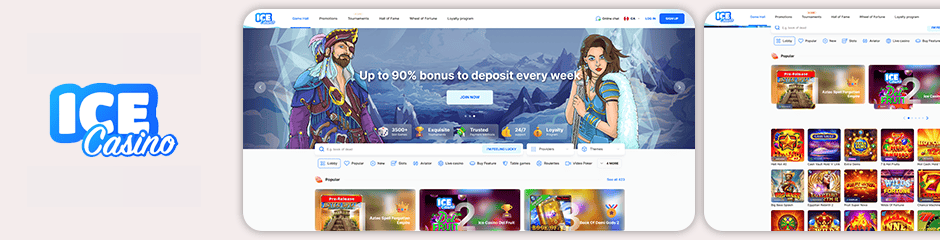
Users in Brazil aiming to top up their accounts without moving to a desktop browser can finish the whole deposit process inside the Ice Casino mobile app. The app replicates the same banking options available on the website, but it incorporates device-level security features like biometric login and push notifications that verify each transaction. As the app stores payment credentials locally, users avoid re-entering card or wallet details on every visit, cutting down on both time and typing errors. The steps below outline how to access the cashier, select a method, and finalize the deposit while staying within Brazilian banking rules and Ice Casino’s own verification requirements.
Boleto Bancário Deposits (Boleto Bancário)
Customers who opt not to provide card details can create a boleto directly inside the app. The system pre-fills the user’s registered name and CPF to cut down on typing errors. Once the amount is defined, explorar o site, a PDF is generated that can be saved to the phone or sent to online banking for payment. The boleto stays valid for twenty-four hours; after the bank clears the slip, typically the next business day, the cashier balance updates the deposit. Although more time-consuming than Pix or cards, boletos enable users to top up accounts even when their debit cards have daily gambling restrictions.
First Launch and Connecting Accounts
Opening the app for the first time displays a language selector preset to Portuguese. The player then inputs the same login credentials employed on the website; two-factor authentication via SMS or authenticator app is necessary on the first sign-in from a new device. Once inside, the app pulls the account balance and any pending bonuses so the cashier screen already reflects current limits. If the user previously verified an address or document on the desktop site, that status rolls over automatically. New verification documents can be snapped and uploaded straight from the phone gallery or camera, and the review usually completes within one business day.
Data Consumption and Performance Notes
A usual deposit session uses approximately 1.2 MB of data, much of it used by the secure payment gateway’s scripts. The app buffers images and interface elements so return visits load nearly entirely from local storage. On older 3G connections the cashier can take up to eight seconds to render, but the actual payment authorization still goes through at the same speed as on Wi-Fi because the heavy cryptographic work takes place on the provider’s servers rather than the handset. Battery impact keeps modest; the app idles the radio between screens and only activates it for the final confirmation call.
Responsible Gambling Features in the App
Before confirming any deposit, the app displays the current daily and monthly deposit limits set by the player. If the attempted amount would breach those limits, the confirmation button is blocked and a short explanation shows up. Users can change their own limits from the responsible gaming menu without contacting support, although decreases take effect immediately while increases demand a twenty-four-hour cooling-off period mandated by Brazilian regulations.
Supported Devices and Operating Systems
The Ice Casino app runs on modern Android and iOS devices that continue to get security updates from their vendors. On the Android platform, the minimum supported version is 8.0 Oreo, although the development team recommends Android 10 or more recent for better graphics rendering and reduced crash rates. iPhone users require at least iOS 13; devices operating on iOS 15 or later deliver the fastest load times owing to improved WebKit performance. Memory footprint stands around 85 MB after the initial install, so even entry-level phones with 3 GB of RAM can maintain the app resident without repeated reloads. Tablets are likewise compatible, however the interface stays in portrait mode to mirror the phone layout and minimize UI stretching.
Session Expirations and Auto-Save
The cashier session times out after fifteen minutes of inactivity to secure payment details left on screen. A floating timer in the corner tracks the remaining seconds; tapping anywhere restarts the clock. If the session does time out, the app restores the previously entered amount and method selection so the player does not need to restart. This auto-save file is deleted from memory the moment the deposit is confirmed or manually cancelled.
Deposit Charges and Exchange Rates
The majority of local methods such as Pix and boleto carry zero operator fees, yet international cards might carry a 3.5 % cross-border charge that is displayed as a separate line on the confirmation screen. The app transforms any displayed foreign amount into reais using the commercial exchange rate published by the Central Bank at the moment the form loads. Players can toggle a small chart that indicates the rate trend over the previous twenty-four hours, assisting them in deciding whether to proceed or wait for a more favorable quote.
E-Wallet Options and Ceilings
Various international e-wallets accepted by Ice Casino show up in the app menu, such as Skrill, Neteller, and ecoPayz. Each wallet displays its own deposit ceiling, often higher than card limits, which accommodates players transferring larger sums. The app stores the e-wallet login token after the first authorization, so returning users simply require to confirm the amount and approve the transfer inside the wallet’s own mobile interface. Processing times vary from instant to three hours, according to the provider’s risk scoring. Withdrawal speed back to the same wallet is also shown, helping users organize cash-flow timing.
Security and Authorization Layers
Every deposit over a threshold established in the player’s profile triggers an extra confirmation step. The app may send a push notification that includes a six-digit code, or it can require the user to input again the PIN set during first launch. Fingerprint or Face ID may replace the PIN on compatible devices, yet the code option stays available as a fallback if biometric hardware fails. All payment data travel over TLS 1.3, and the app refuses operate on rooted Android builds or jailbroken iPhones to reduce the risk of credential theft.
Employing Brazilian Instant Payment Methods
Pix, the Central Bank of Brazil’s instant-payment rail, is displayed as a dedicated button in the cashier. The player picks a saved Pix key or creates a new one directly in the app. After the amount is confirmed, Ice Casino generates a dynamic QR code and a copy-and-paste code that remain valid for five minutes. Scanning the code with the phone’s banking app finishes the transfer; the casino receives a webhook notification and credits the balance almost immediately. Because Pix carries no operator fees, the full amount reaches the gaming wallet without deductions, which makes it it attractive for frequent small top-ups.
Downloading and Setting Up the App
Brazilian users cannot find the Ice Casino app in Google Play or the Apple App Store because gambling applications are banned in both marketplaces. Rather, the site provides a direct APK for Android and an enterprise-signed IPA for iOS. On Android, the user first enables “Install from unknown sources” in the security menu, then selects the download link shown in the account dashboard. After the file lands in the downloads folder, a standard package installer runs; the process lasts between thirty and ninety seconds on a 4G connection. iPhone users get a configuration profile that must be approved in Settings, after which the app shows up on the home screen. Both flows include hash verification so players can verify the file has not been modified between the server and the device.
Navigating to the Mobile Cashier
The deposit button appears in the lower navigation bar on either platform, identified by a Brazilian Real symbol. Tapping it launches a compact menu that lists every payment method the player’s account has been approved to use. Filters at the top let users to narrow choices to cards, e-wallets, bank slips, or instant transfers. Each option presents its minimum and maximum deposit values, estimated processing time, and any service fees applied by the provider. Selecting a method reveals a short form where saved details appear as selectable tokens, minimizing the need to retype numbers during subsequent sessions.
Discrepancies From the Computer Site
The mobile cashier omits several advanced filters that are present on the desktop version, such as sorting by historical usage or grouping by currency. In return, the app adds quick-switch buttons for the last three payment methods used, a feature unavailable on the larger screen. Receipt PDFs generated inside the app are stored in a dedicated folder that can be accessed without leaving the application, whereas the website requires a browser download. Finally, the mobile layout condenses the transaction history into swipeable cards, making it simpler to review the last ten deposits while commuting or waiting in line.
Identity Checks Before Deposits
Ice Casino demands every Brazilian account to finish at least identity verification before the first deposit can exceed R$500. The app walks users through a two-step capture: a photo of the CPF card or driver’s license then a short facial scan that corresponds to the document. para o guia completo The entire package is coded and transmitted to the compliance team; status updates surface as in-app notifications rather than emails. Until verification passes, the cashier presents a progress bar and a list of missing items so players know exactly what to upload next.
Depositing with Cards Inside the App
Local and global Visa and Mastercard debit cards continue to be the most popular funding route for Brazilian players. After choosing the card option, the app prompts for the card number, expiry date, and CVC just on the first use; subsequent deposits depend on a tokenized version kept in the device’s secure enclave. The form verifies the BIN in real time so users instantly see if the card issuer enables gambling transactions. Once the amount is entered, a summary screen displays the exact total that will be charged, incorporating any foreign-exchange markup if the card is billed in a currency other than reais. Confirmation triggers 3-D Secure authentication inside the app via an embedded web view, after which the balance refreshes within seconds.

Typical Troubleshooting and Problem Solving
From time to time a card issuer refuses the transaction even though the daily limit has not been met; the app displays the exact response code so the player can get in touch with the bank with exact information as opposed to generic “transaction failed” wording. If a Pix QR code runs out before the user completes the banking-app payment, a refresh button produces a new code with no resetting the amount field. Android users who experience a “package not installed” error after sideloading typically need to enable “verify apps over USB” or temporarily disable battery-optimization restrictions that block background verification services.
Upcoming Changes and Compatibility Roadmap
The development team releases quarterly release notes inside the app’s “About” screen. Upcoming builds are scheduled to introduce support for Android 14’s predictive back gesture and iOS 17’s Live Activities, which will surface deposit status on the lock screen. Legacy devices running Android 8.0 will lose compatibility once Google drops security patches for that version, at which point the minimum requirement will shift to Android 9. Players can sign up for beta builds through an in-app toggle, receiving early access to new payment methods before they hit the stable channel.